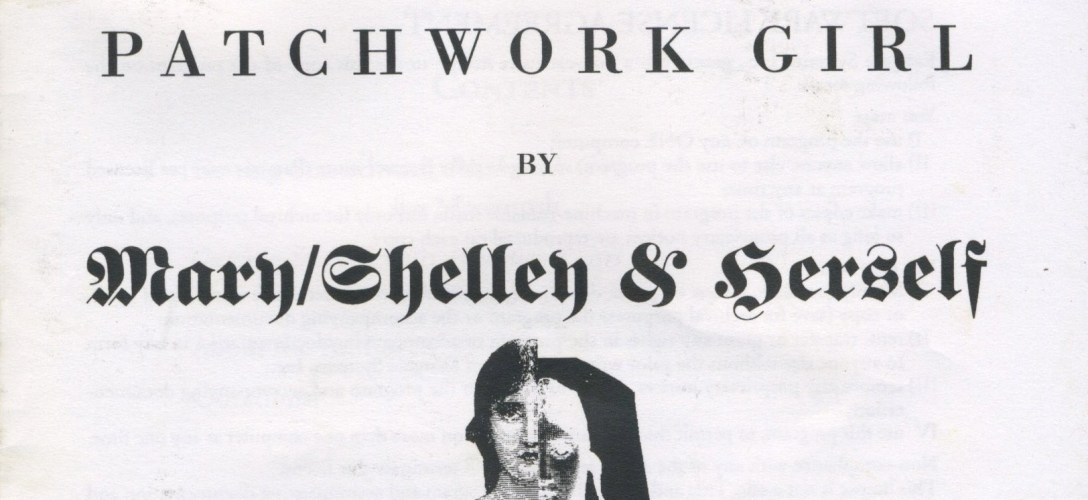
Visiting the Tufts University Art Gallery’s States of Freedom: The Figure in Flux exhibition after exploring Shelley Jackson’s Patchwork Girl (1995) was deeply illuminating. Thus far, I’ve explored the graveyard and journal sections of Patchwork Girl, though it is often difficult to tell where I am within the hypertext! I find myself eager to make sure I don’t miss any links within the text, which often slows my progress.
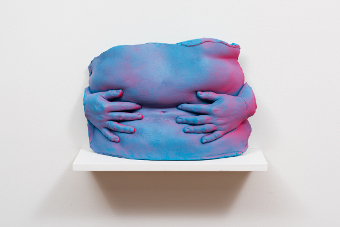
While reading the graveyard section, I was struck by how much more herself in Patchwork Girl embraces the source of her parts than the creature does in Frankenstein. In Frankenstein, it is almost as if the creature and all of his components appear fully formed on the night of his awakening. In Patchwork Girl, however, each component of herself has a story and personality which inform the whole and affect her thoughts and actions. In States of Freedom: The Figure in Flux‘s split/multiples section, artists isolated individual body parts such as a stomach or hand which invited reflection on how that part contributes to but is separate from the whole. Isolating the parts in both Patchwork Girl and States of Freedom: The Figure in Flux causes us to see them as less human and more as objects, but it also invites us to consider how our bodies are themselves objects composed of these same parts. Our bodies are physical objects, but they are also tied inexplicably to our consciousness. Perhaps that bond continues beyond death and decomposition into their next forms, be they soil or creature.
 Feminist Science Fictions