This week, I’ve been thinking a lot about how works use multiplicity of the mind and body as a metaphor for a fractured or conglomerated identity. In Shelley Jackson’s Patchwork Girl, the Patchwork Girl (“Herself”) is composed (or “re-composed”) of many, many parts. As I touched on last week, each of those parts come from different origins. I’m curious how those parts contribute to the consciousness of Herself. Does she simply know of their origins and have their memories, which serve as a kind of foundation for her current identity, or do those parts contribute actively to her consciousness, imposing their own ideas and opinions? The latter could be described as a sort of legion or hive mind in which each part contributes to the thoughts, feelings, and decisions of the whole.
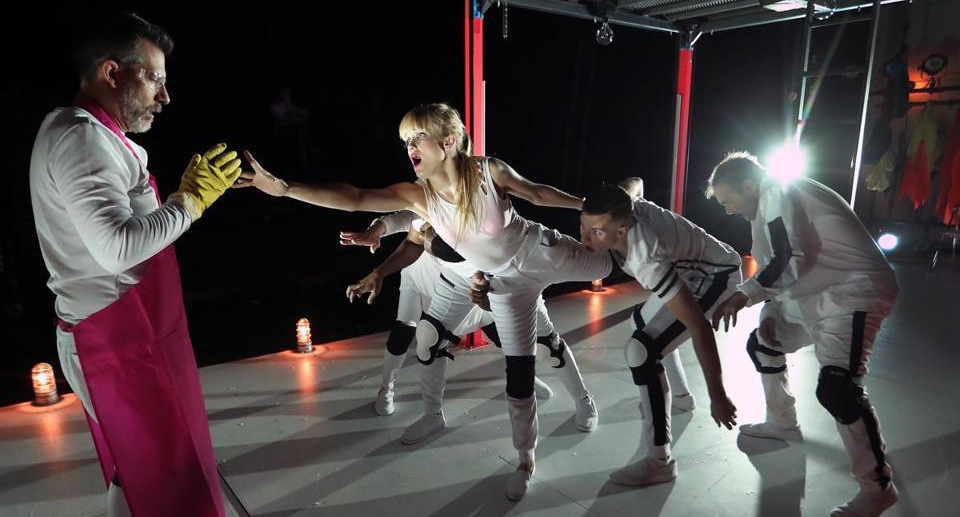
Similarly, the Central Square Theater production of Nick Dear’s Frankenstein explored the creature’s heterogeneous composition. In their production, the creature was played by between 3 and 6 different actors at once, all switching in and out of the creature’s “body”. This created a conglomeration of limbs, faces, and emotions that suggested the creature’s confused and conflicted internal state. I found myself connecting certain actors to certain facets of the creature’s mind. I was particularly interested in why certain actors were chosen to be the creature’s “head” at certain times. For instance, in the dramatic confrontation between Frankenstein and the creature, where Frankenstein is hanging above the creature, the creature’s “head” was played by Omar Robinson, the only Black member of the cast. This created a tension between the educated, privileged scientist and his “wretched,” ostracized creation that would likely have had a different tone had the “head” been another cast member.
 Feminist Science Fictions