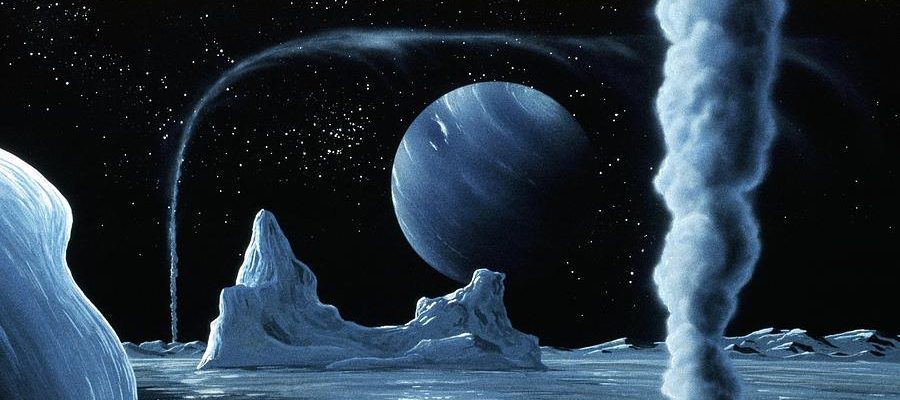
This week, we read four of Vandana Singh's short stories: "The Woman Who Thought She Was a Planet," "Conservation Laws," and "The Tetrahedron" from The Woman Who Thought She Was a Planet and Other Stories (2014) and "Lifepod" from Ambiguity Machines and Other Stories (2018). In "The Woman Who Thought She Was a Planet" and "The Tetrahedron" in… Continue reading Accepting the Alien

Category: Weekly Reflections
Dawn, Parts III & IV
WOW, I really enjoyed reading Octavia Butler's Dawn (1987). Of all the novels we've read for this course, Dawn has the most compelling narrative voice and feels the most current, though it was written over thirty years ago and is predicated on nuclear winter. Perhaps this is because the novel primarily deals with themes as broad as all… Continue reading Dawn, Parts III & IV
Dawn, Parts I & II
I've really enjoyed Octavia Butler's Dawn (1987) thus far. While Samuel Delany's Trouble on Triton (1976) was pretty difficult for me to read, I find myself getting engrossed in Dawn's narrative. Part of this, I think, is because Lilith is a far more likable protagonist. In addition, Butler's narrative style is much more accessible than Delany's parenthetical, stream-of-consciousness narration. As… Continue reading Dawn, Parts I & II
Trouble on Triton
I found Samuel Delany's Trouble on Triton (1976) quite a challenging read, which is perhaps part of Delany's goal. Bron is particularly unlikeable, at least in my experience, which keeps me from getting engrossed in the novel like I might usually in other fiction works. He seems very focused on remaining unique and un-categorizable while separating… Continue reading Trouble on Triton
Revising Yourself
This week, I was really struck by the idea of re-examining published information, especially self-published information. In both Ursula K. Le Guin's "Is Gender Necessary? Redux" (1976/1987) and Anne Fausto-Sterling's "The Five Sexes, Revisited" (2000), the authors return to their previous works to re-evaluate their conclusions in a modern context. Le Guin directly revises her… Continue reading Revising Yourself
The Left Hand of Darkness
While reading The Left Hand of Darkness by Ursula K. Le Guin (1969), I was struck by how it simultaneously seems so current but yet so outdated. For instance, the novel's focus on deconstructing gender was very familiar to me as a student in a liberal collegiate environment. However, Genly Ai's constantly misgenders the Gethenians as male-… Continue reading The Left Hand of Darkness
No Woman Born & Bridesicle
This week myself and two partners co-taught a lecture on "No Woman Born" by C.L. Moore (1944) and "Bridesicle" by Will McIntosh (2009). Though these two short stories were written over sixty years apart, they share many of the same themes. While we were designing our co-teaching curriculum, I was particularly interested in discussing how… Continue reading No Woman Born & Bridesicle
Multiplicity of the Mind & Body
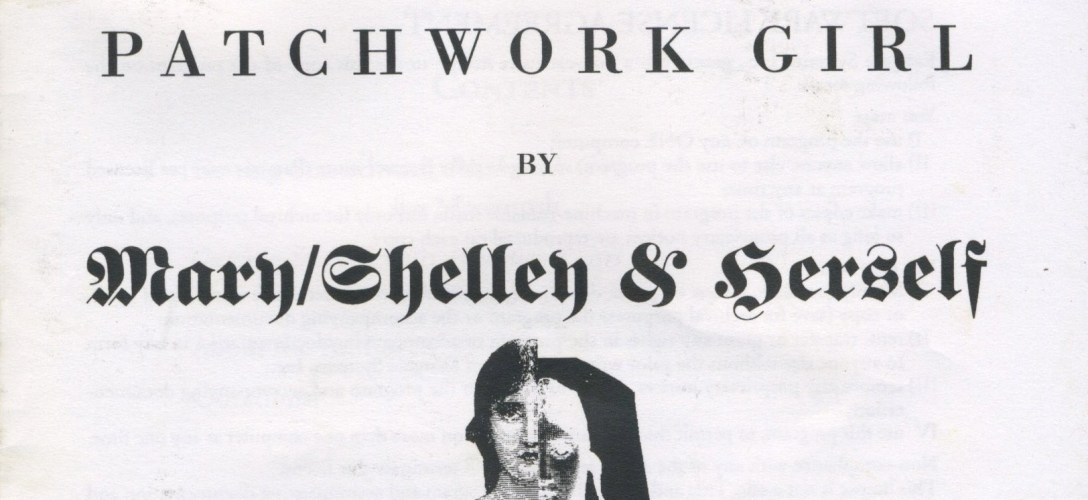
This week, I've been thinking a lot about how works use multiplicity of the mind and body as a metaphor for a fractured or conglomerated identity. In Shelley Jackson's Patchwork Girl, the Patchwork Girl ("Herself") is composed (or "re-composed") of many, many parts. As I touched on last week, each of those parts come from different… Continue reading Multiplicity of the Mind & Body
Patchwork Girl & States of Freedom
Visiting the Tufts University Art Gallery's States of Freedom: The Figure in Flux exhibition after exploring Shelley Jackson's Patchwork Girl (1995) was deeply illuminating. Thus far, I've explored the graveyard and journal sections of Patchwork Girl, though it is often difficult to tell where I am within the hypertext! I find myself eager to make sure I don't… Continue reading Patchwork Girl & States of Freedom
Frankenstein (Volume III)
The third and final volume of Frankenstein by Mary Wollstonecraft Shelley (1818) is an excellent conclusion of the themes which have been building throughout the book such as sadness versus remorse, selfishness, ethics, mental illness, vengeance, and faith. One of the themes which interests me the most is the progression of the creature's power. He begins as… Continue reading Frankenstein (Volume III)